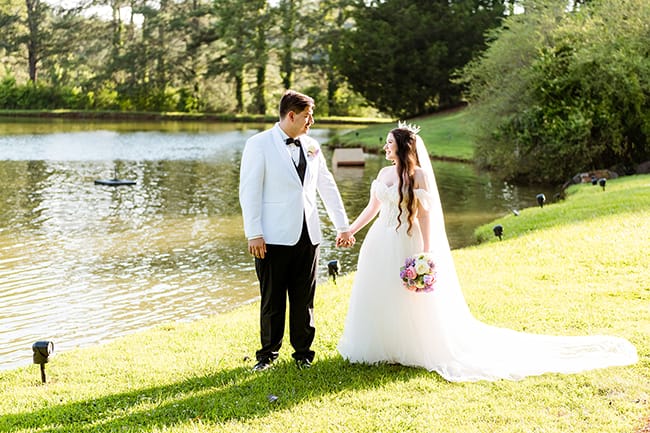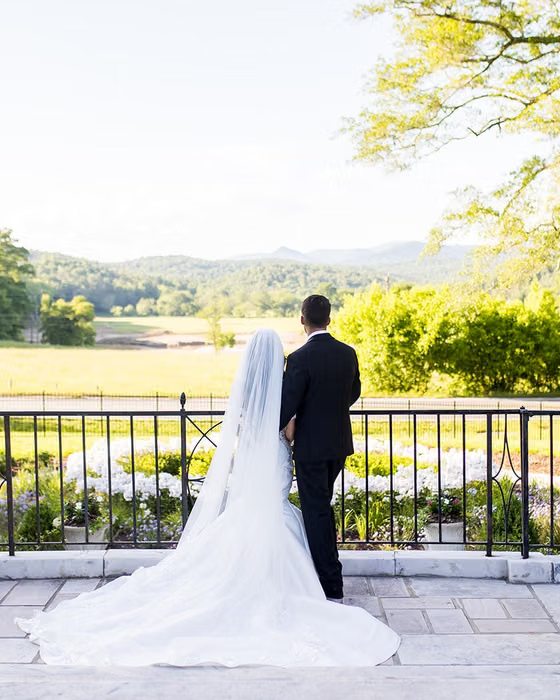
A wedding day looks pretty different from behind the camera. Your planner sees a schedule, and we see a string of little windows: the one when the dress is still on the hanger, the one when the light turns gold, the one when your grandmother is still standing near the aisle. Some stay open for an hour and some for five minutes.
So here’s your day in the order we photograph it, with how long each part really takes and what we’ll need from you to make it work. If you’d like the planner’s version for the most common start time, our 4 PM ceremony timeline pairs well with this one.
Details and getting ready: at least 90 minutes before the ceremony
The details themselves are quick. We need about 20 minutes to photograph the dress, the rings, the invitation suite, the shoes and the flowers properly. The 90 minutes is for everything before the ceremony together: the details, getting ready, the bride with her bridesmaids, the bride on her own, the groom with his groomsmen and the groom on his own. If you’re skipping a first look, that’s the minimum we’d plan, and it assumes everyone’s on time. A first look adds time on top of it.
After the details we move on to the people: the last stage of hair and makeup, a letter being read, a parent fastening a necklace.
Details are quick to photograph and slow to gather. The most useful thing you can do is put everything in one spot with window light, and ask someone to find the ring box before we get there.
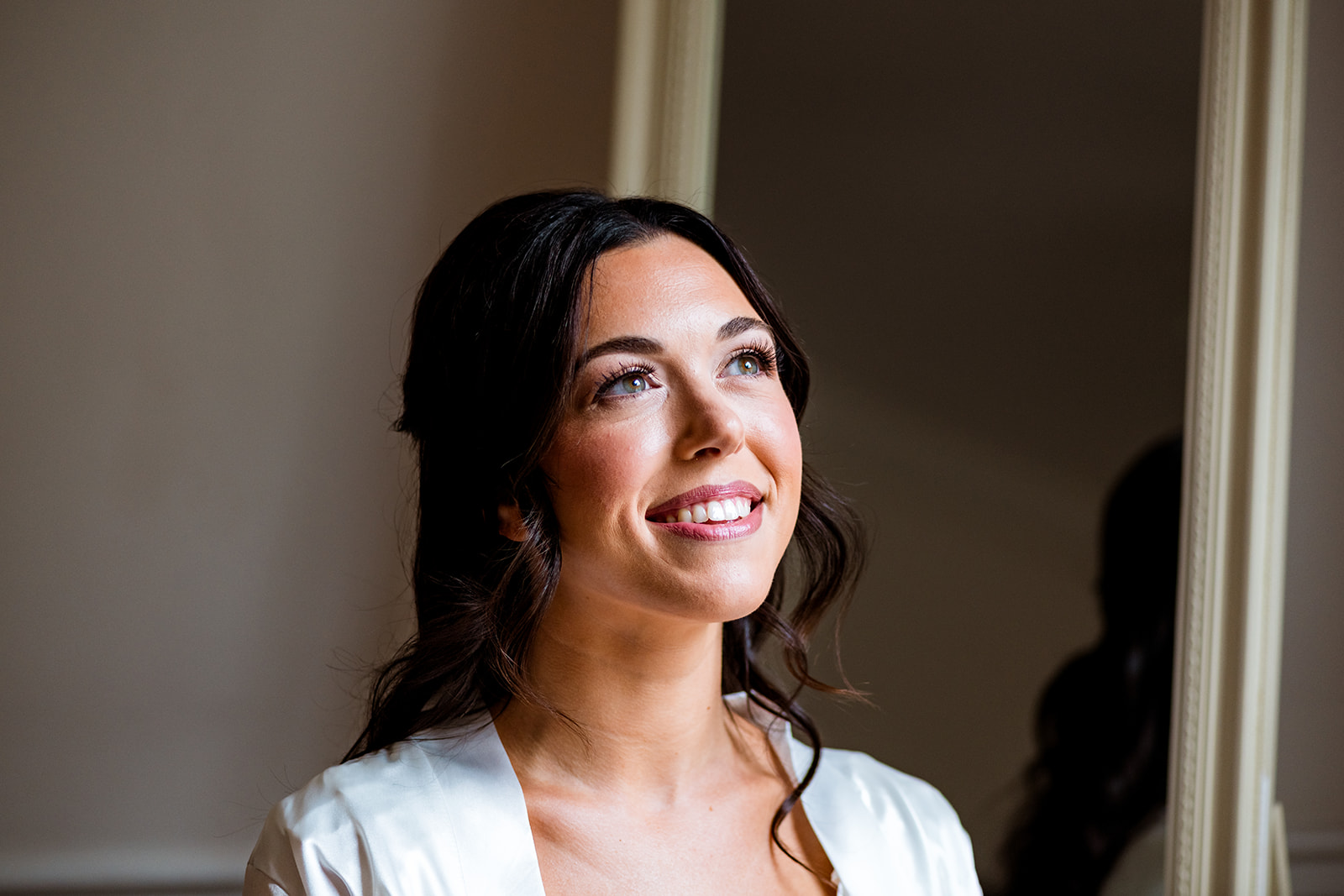
In the planning questionnaires of the couples who filled one in with us this year, 72% of those answering wanted a moment with dad. We can protect that moment easily when we know about it ahead of time and hair and makeup are finished.
First look or first touch: which feels like you?
Next up, the question everyone asks. Forty-seven percent of the couples who filled in our 2026 planning questionnaire plan a first look, and 45% do not. If you do one, it takes about 15 to 20 minutes with us a few steps away, and it moves your portraits and your wedding party photos ahead of the ceremony. We say more in first look or not.
If you’d rather wait for the aisle, a first touch is the alternative: you stand back to back or with a wall between you, hold hands, and talk before the ceremony. You get the private moment without the reveal.
Wedding party photos
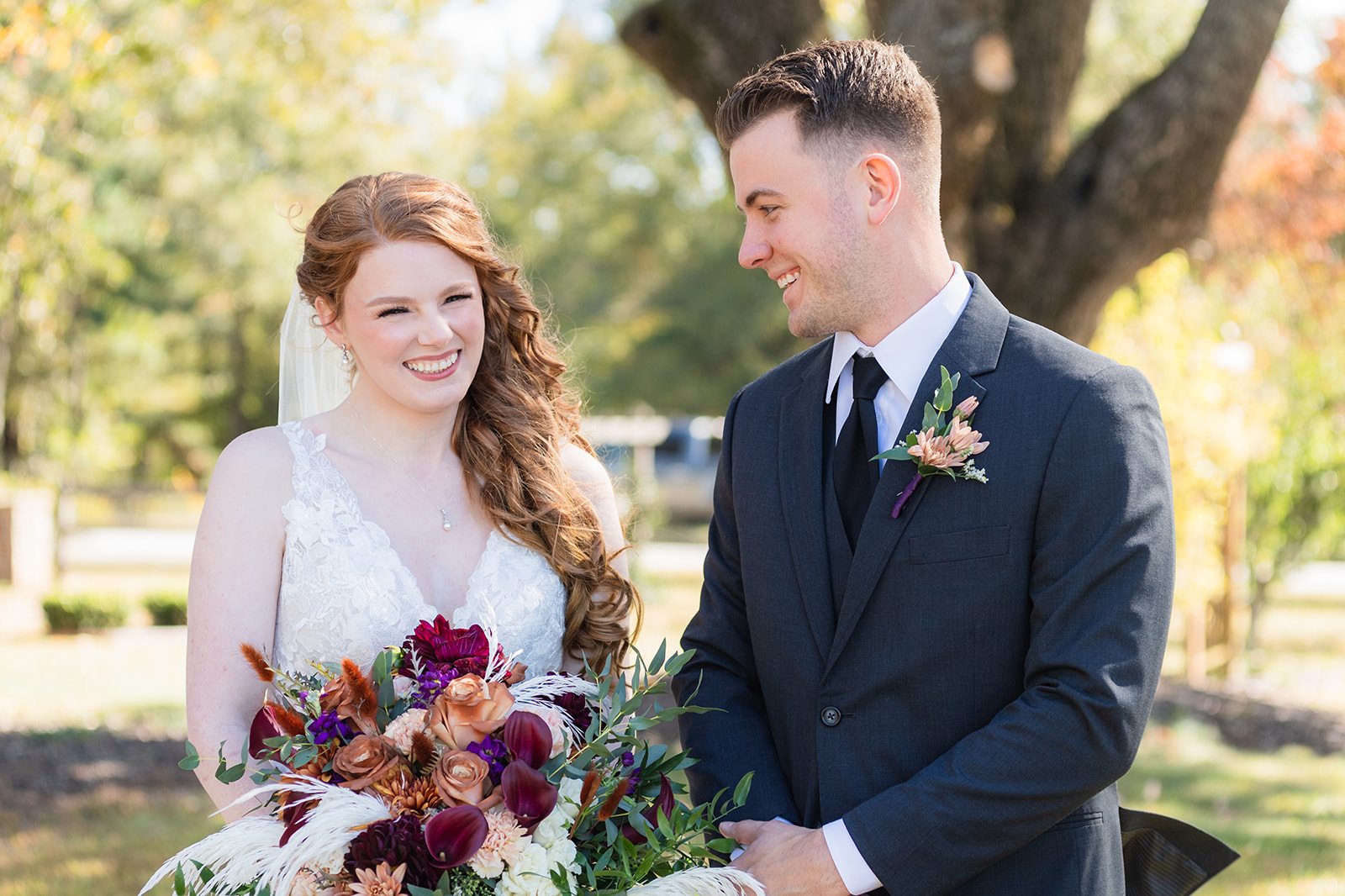
This is the group shot everyone pictures first, and it works differently depending on your first look. With a first look, we photograph the whole wedding party before the ceremony. Without one, we do it in two halves before the ceremony, kept apart, and only the one big group afterward.
Give this block 20 to 30 minutes. It goes faster when everyone’s dressed, has their flowers and knows where to stand, and slower when someone’s still in a robe.
During the ceremony, we never stop shooting
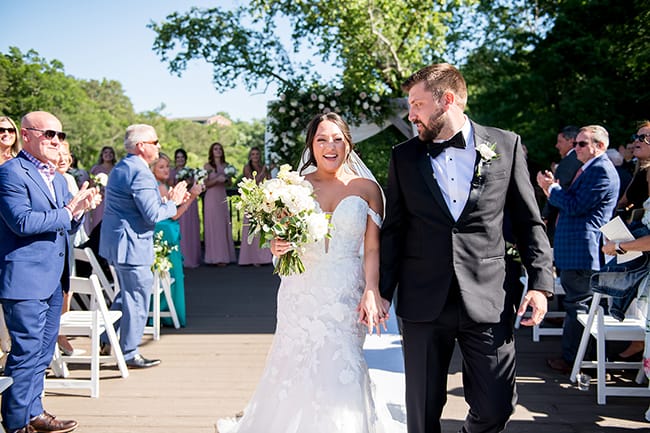
Once the music starts, we don’t stop. We cover the processional, the faces of the people watching, the vows, the rings and the kiss. With two photographers, one usually works from the front and the other from the opposite side, so you get both of your reactions, and both of us move as the ceremony unfolds: one may slip to the back for the bride coming down the aisle, for example. Where each of us stands depends on the location and on what you’ve asked for.
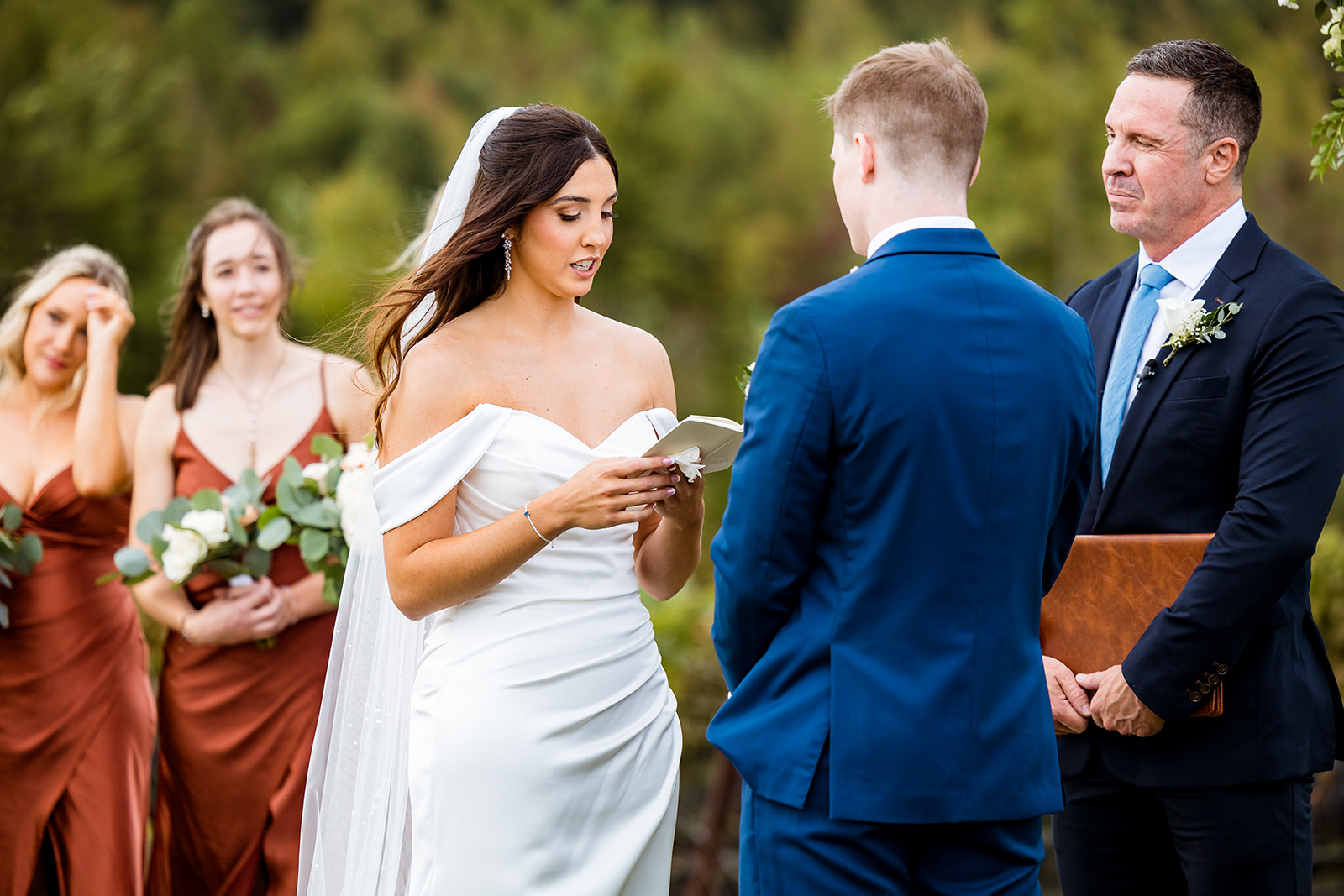
What we need from you is a clear aisle, a word with your officiant about where we may stand, and a decision about phones. Everything else is ours to handle.
Family photos, right after the ceremony
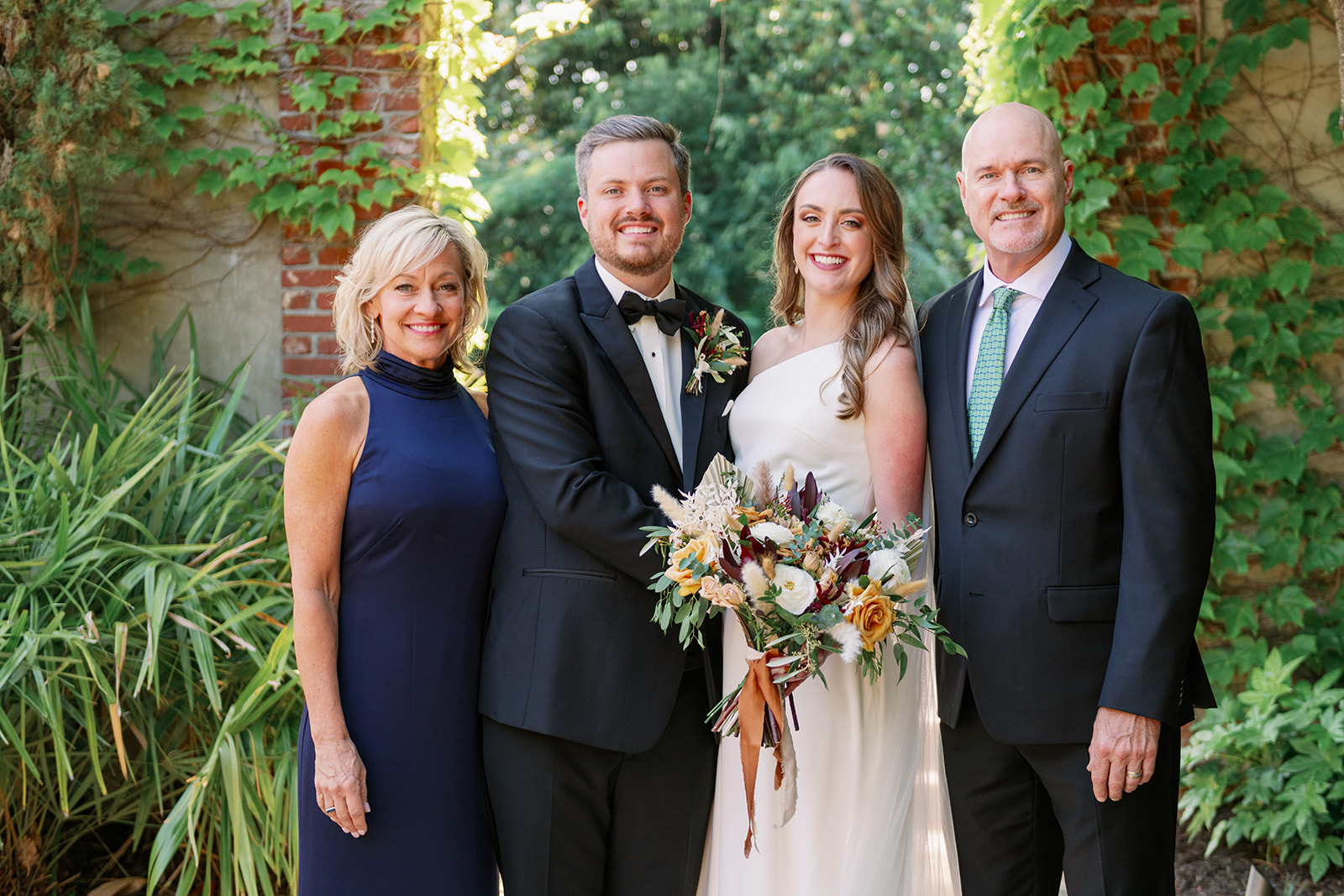
Family photos happen right after the ceremony, with or without a first look, because that’s when everyone is together. We plan about a minute per grouping plus a 5 to 10 minute buffer, so 10 to 20 minutes in total. The standard list of parents, grandparents, siblings and their spouses is almost always done in 15 minutes.
We call groups by first name, biggest group first, then let people go. Write the list in advance, and name one person on each side to gather the next group. We have a family photo list to start from.
Couple portraits around sunset
Here’s the one that surprises people. People underestimate this block in both directions. We don’t need an hour. In good light, 20 to 30 minutes is enough for the two of you.
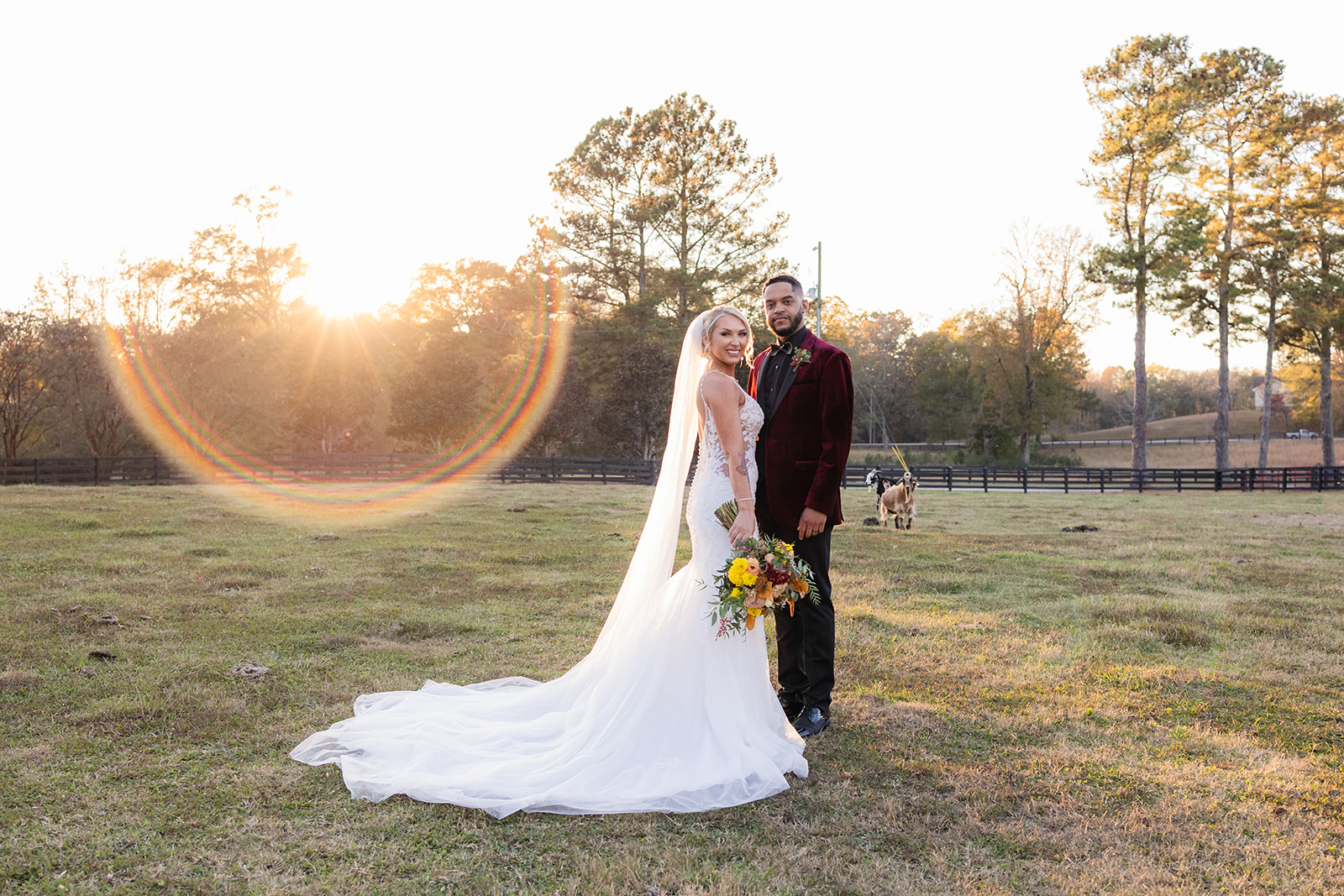
What we need is the right light, and that sets the schedule. Leave at least an hour between the end of the ceremony and sunset, and 90 minutes is better, which gives you family photos, a drink and a breath before we step out. For when the sun goes down in your month, see our guide to the best month to get married in Georgia.
Twenty minutes in good light beats an hour in the wrong light.
Entrance, toasts, dances and the dance floor
This is the fun stretch, and it’s mostly out of our hands. From here the day belongs to your DJ or band, and we follow along. In the questionnaires, the median first dance happens 105 minutes after the ceremony starts, and the median dinner 90 minutes after. We photograph the entrance, the toasts, the first dance, parent dances and then the open dance floor, when the best candids tend to happen.
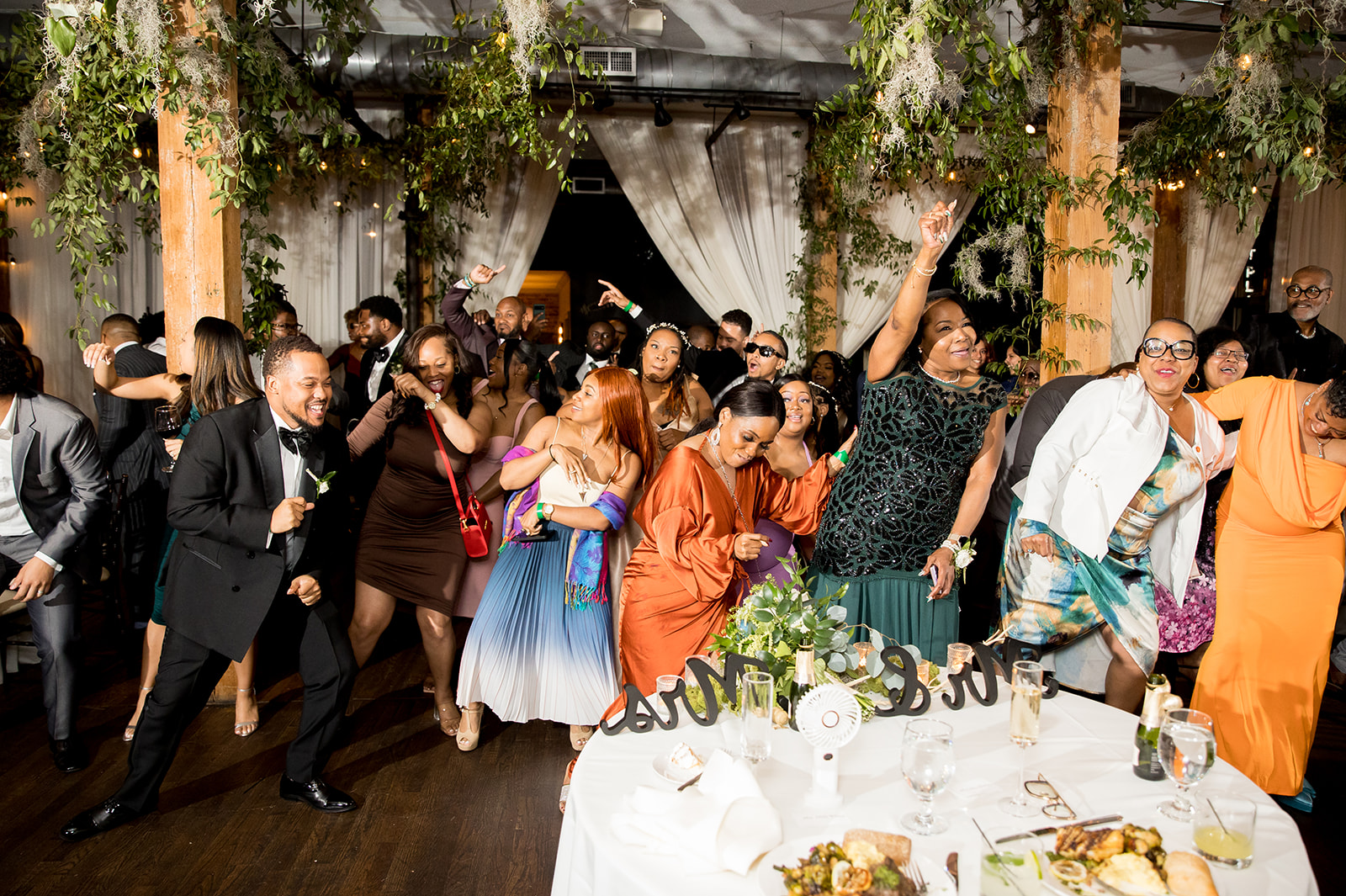
Keep toasts short and the microphone tested.
The exit
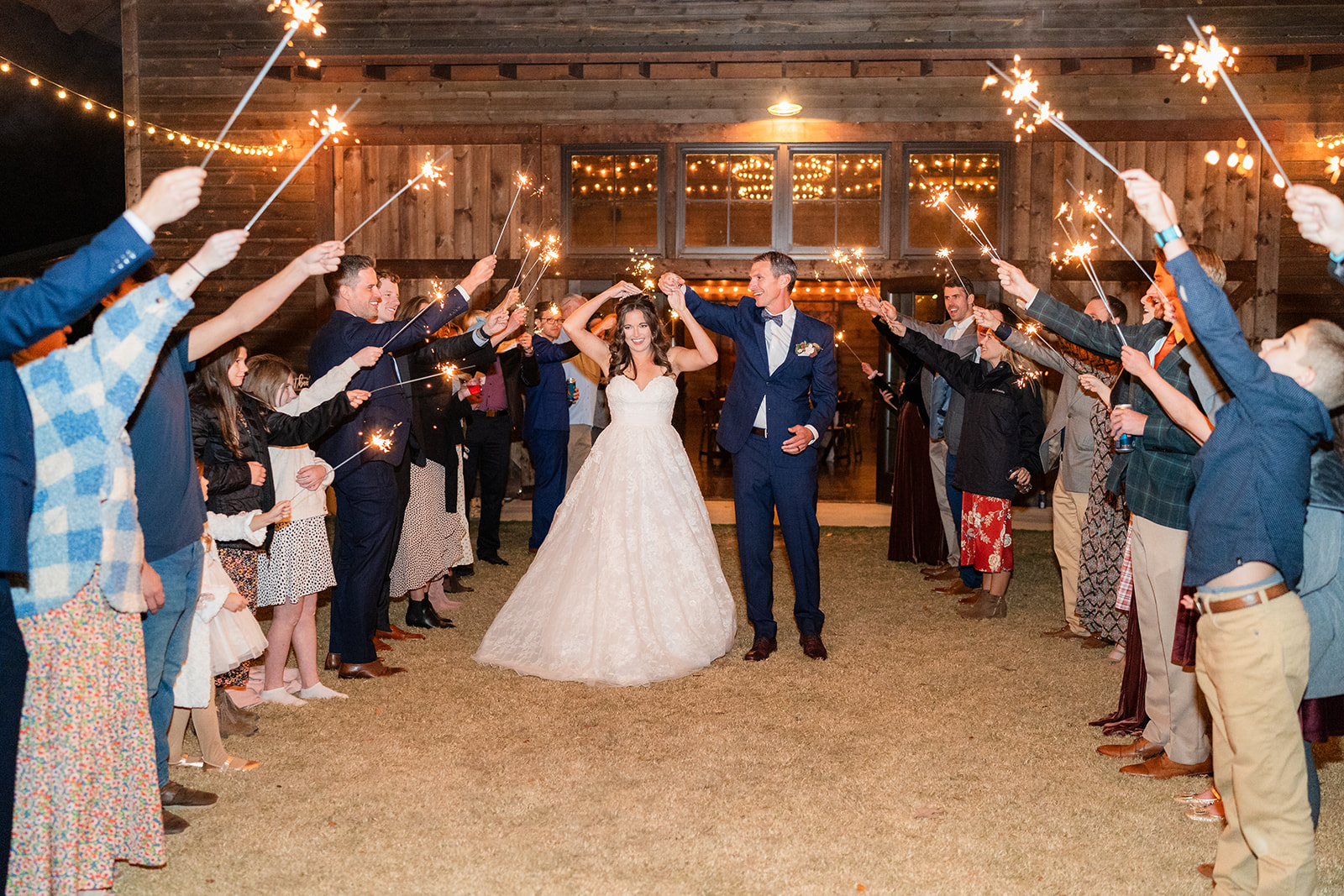
A send-off is a great way to end the night. If you plan one, the exit is the last thing we shoot, and it takes about 15 minutes, because getting everyone outside and lined up takes longer than the exit itself. It’s also the first thing to go when the hours run out. In our team’s post-wedding notes from 2024 to 2026, 29 of 212 weddings mention an exit planned or requested. We’ve got ideas beyond sparklers in exit ideas, and anything that lands on the ground needs the venue’s approval first.
The day at a glance
If you’d like it all on one screen, here’s the whole day in a table.
| Block | Typical length | What we need | Common mistake |
|---|---|---|---|
| Details and getting ready | At least 90 minutes before the ceremony without a first look (details take about 20) | Items gathered in one place, everyone on time | Hair and makeup still running |
| First look or first touch | 15 to 20 minutes | A private spot with good light | Choosing a spot with no shade |
| Wedding party | 20 to 30 minutes | Everyone dressed and present | Starting while people are missing |
| Ceremony | Your length | Clear aisle, officiant agreement | Phones in the aisle |
| Family photos | 10 to 20 minutes | A written list, first names | No list, or a list in someone’s head |
| Couple portraits | 20 to 30 minutes | Good light, an hour before sunset | Leaving it until the light is gone |
| Reception moments | Set by your DJ or band | A short, clear plan | Long toasts and a late dinner |
| Exit | About 15 minutes | Venue approval, coverage that reaches it | Hours ending before it |
Where the day runs late, and what 8 or 10 hours covers
Last, a reality check from our own notes. Across the 212 weddings in our 2024 to 2026 post-shoot notes, 48 ran late. In those 48, the bride or wedding party arriving and dressing was the cause in 21, hair and makeup in 15, a vendor or the venue in 13, and the ceremony starting late in 11. A day can have more than one cause. The pattern is that most delays begin in the morning, which is why the first block should have a buffer.
Your hours decide how much of all this we can cover. Eight hours usually reaches the main reception moments and dancing if the morning holds, while ten hours is what lets the full getting-ready story and the send-off both fit. Our hours guide walks through 6, 8 and 10 hour days. If the day runs long, hours can be added on the wedding day, with your approval by text.
When you’re ready, check your date with us and we’ll sit down and go through the plan together.