If you want to know how to word an unplugged ceremony, here’s the short version: keep it short, keep it kind, and say why. Something like “Please be present with us” does way more than a rule in capital letters. And the best place for those words isn’t only a sign at the entrance, it’s the mouth of your officiant, right before the music starts.
We’ve seen the other version, too, from a few steps back in the aisle. A couple takes their first steps toward each other, and suddenly a row of raised phones fills the frame in front of us. Nobody means any harm. Your people love you and want to keep the moment. But a photo of your face is better than a photo of the back of someone’s phone, and that’s exactly what we want to help you protect.
Why we ask for an unplugged ceremony
So what does unplugged actually mean? An unplugged ceremony is simply one where guests keep their phones, tablets and cameras put away, and three things tend to get better when they do.
First, the aisle stays clear. When a guest leans into it for a better angle, they step into the frame of every photo and video taken from the front. Second, faces look up instead of down, so the pictures of your guests reacting are real reactions. Third, you look out at a room of people looking back at you, which is the point of having a ceremony at all.
Ten ways to word it
Here are ten ways to word the request, in five different tones. Use these as they are or bend them to your own voice. We wrote every one of them for this page.
Warm
- “Today we are so glad you are here. Please put your phones away and share this moment with us. Our photographer will make sure you see every picture.”
- “The people in this room are the reason we are marrying today. Be here with us, with open hands and open eyes.”
Short
- “Be present. Phones away.”
- “Unplugged ceremony. Enjoy the moment, we have it covered.”
Funny
- “We love you, but we love our photographer’s pictures of the aisle more. Please keep phones away until the kiss.”
- “Your phone will still be there in twenty minutes. This only happens once.”
Religious
- “We invite you to join us in prayer and in presence. Please silence your phones and keep them put away during our service.”
- “As we make our vows before God and before you, we ask for your full attention. Thank you for putting your devices away.”
Formal
- “The couple requests an unplugged ceremony. Kindly turn off and put away all electronic devices until the recessional.”
- “In honor of the occasion, we ask our guests to refrain from photography and video during the ceremony. A professional record will be shared with all.”
If you’ve got grandparents who might be a little puzzled by the word “unplugged,” say “phones away” instead. Plain words are never wrong.
Why an announcement works better than a sign
Think of the sign as your backup, because it’s easy to walk past, especially with a hug waiting at the end of the line. People read it, nod and forget it by the time the music starts.
Your officiant is a different story. Guests are seated, quiet and looking forward, and what the officiant says carries the weight of the ceremony itself. It takes about 20 seconds, and here are three scripts for three kinds of tone.
Warm. “Before we begin, a small request from the two of them. They would love for you to be fully here. Please put your phones away for the next little while. Their photographer has the pictures, and you will see them soon.”
Light. “Quick note before we start. These two have hired professionals, so you can relax. Phones away until the kiss, and then you may take as many as you like.”
Formal. “The couple has asked that this ceremony be unplugged. We ask that you silence all devices and keep them put away. Thank you for being with them today.”
Ask your officiant to say it right before the processional, not at the very beginning, so it’s the last thing guests hear before the music.
Small things that help the request stick
A few quiet extras make the whole thing land better.
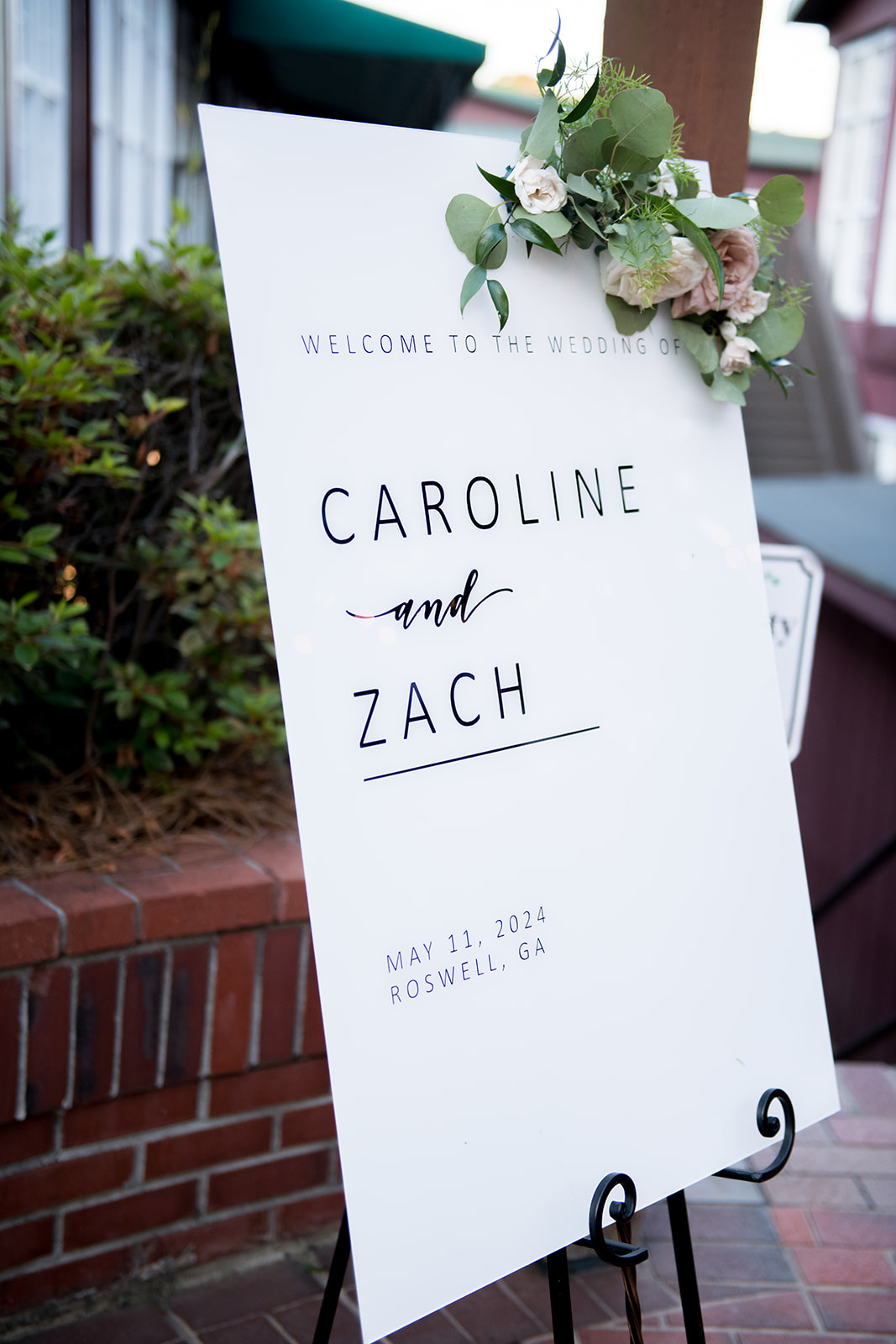
The program line. Add one sentence at the bottom of the program: “We are having an unplugged ceremony. We would love for you to be fully with us.” Guests read programs while they wait, so it’s a quiet second chance.
The wedding party. Ask your wedding party to leave their phones behind, with a bridesmaid or a friend at the back. If the people standing next to you are holding phones, guests will assume it’s fine to do the same.
The ushers and family. Have an usher or a family member mention it kindly as people arrive. A friendly “we are keeping phones away for the ceremony” at the door lands better than a sign alone.
Tell us. If you have a planner or coordinator, tell them your plan too. Our own job is to photograph what happens, and we’re glad to help carry the message, but the wording is yours.
The moment that matters most: the processional
If you can only protect one moment, protect the processional. That’s when guests lean out into the aisle, hold phones high and step toward the center to catch their first sight of you. It lasts a minute or two, and it’s the one stretch of the ceremony that can’t be done again.
The vows and the kiss are close behind, but the processional is where it most often goes wrong, because it’s the one moment when guests are standing or turning in their seats. Mention it directly: “Please stay seated and keep the aisle clear as the wedding party and the couple enter.”
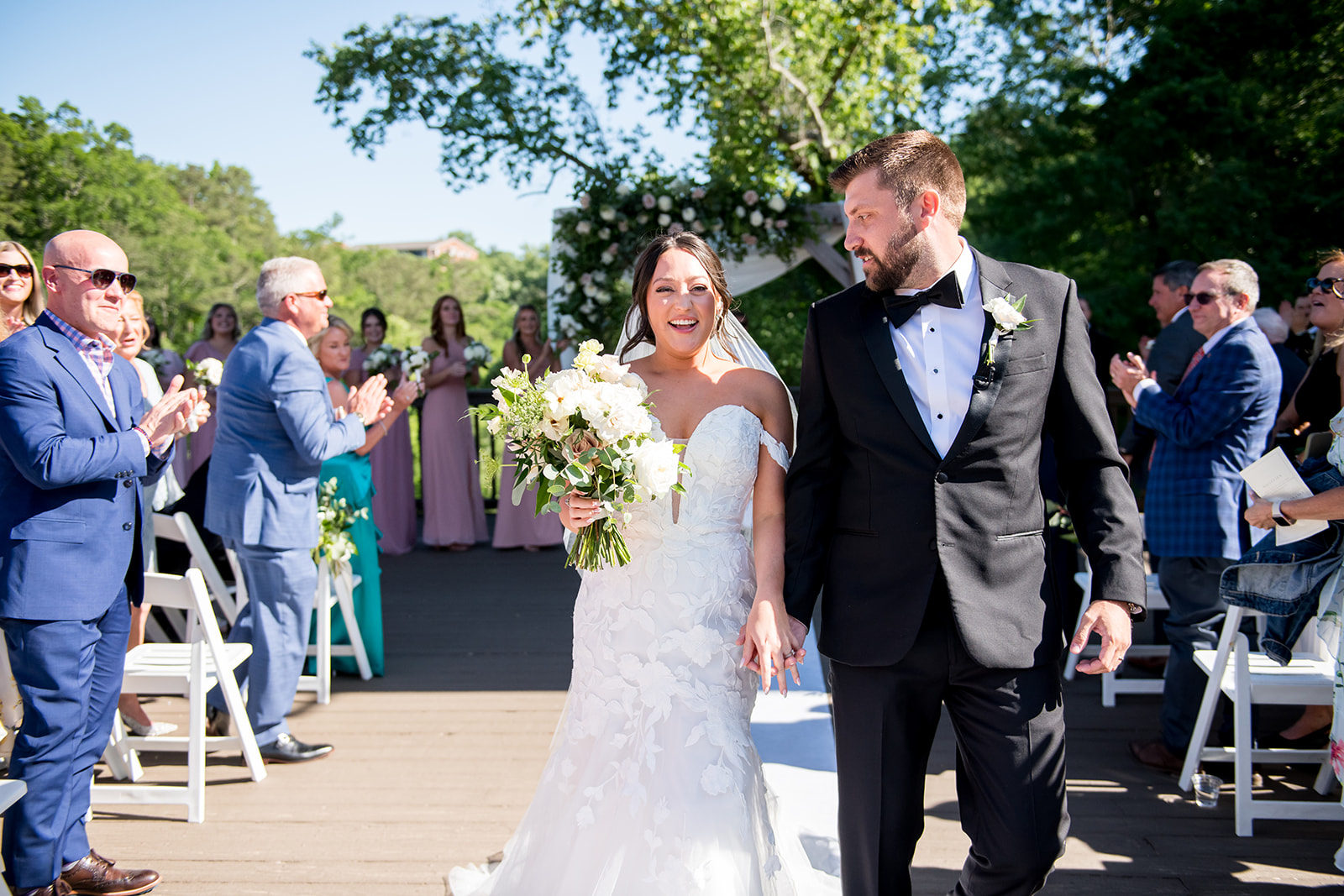
Guests will happily put their phones away if you tell them why, and tell them out loud.
The half unplugged compromise
If full unplugged feels like too much, you’re not alone. Maybe some of your guests are traveling from far away, or a grandparent would love one photo of the aisle. There’s a middle ground for that: phones away for the ceremony, and photos welcome everywhere else.
Say it that way on your sign: “Phones away for the ceremony. Take all the photos you like at cocktail hour and the reception.” It lets guests give you their full attention for twenty or thirty minutes, and then lets them celebrate however they like. Cocktail hour is a great time for group selfies, and your guests will have more to share than they’d have had from the back row.
If you’re building a schedule around it, our wedding day photography timeline shows where the ceremony sits in the day. It also helps to ask your photographer how they handle guests in the aisle, and the questions to ask a wedding photographer include that one.
A note on social media
Phones come back out at cocktail hour, so it’s worth a word about posting. If you’d like to keep your day a surprise, add one more line: “Please do not post photos before the couple does.” A good time to say it is at the end of the announcement, or on the sign. Most guests are glad to know, and it saves you from seeing your own dress first on a cousin’s story.
You can also give them something to post. A short hashtag, or a promise that photos will be ready in a few weeks, takes the pressure off.
Where to start
It’s less work than it sounds. Pick one wording from the list, ask your officiant for the 20 seconds, and put one line in the program. That’s the whole plan. And if you’re still choosing a ceremony space, our guides to In The Woods and Ivy Hall show two very different aisles. When you’re ready, come say hi and check your date with us at /#contactus.