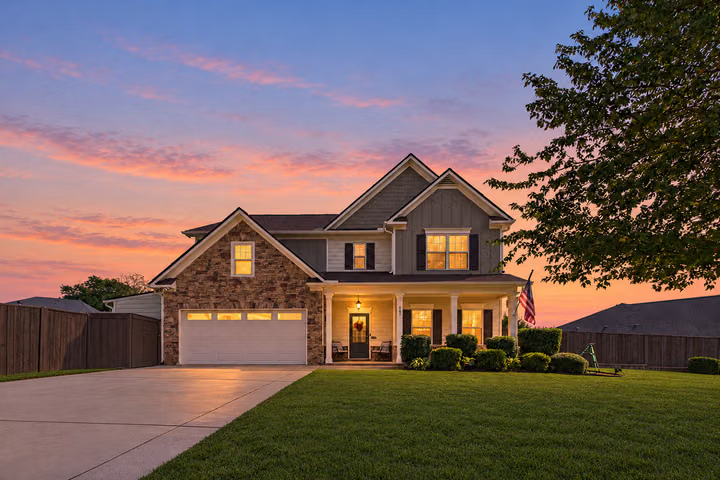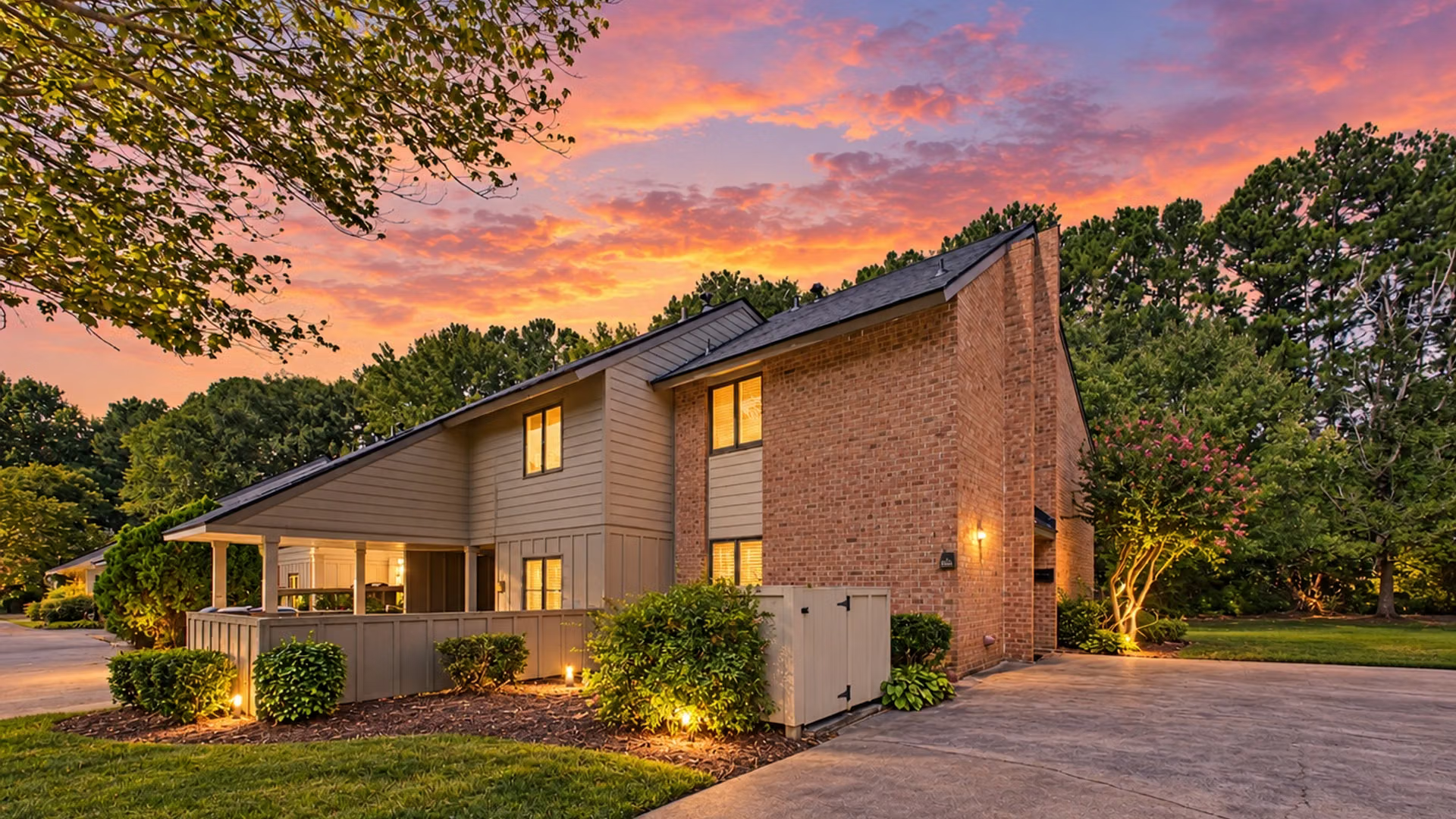
Virtual twilight is a daytime photo of the outside of a home, edited into a dusk scene. The sky turns to sunset colors, the windows glow, and the exterior lighting comes on. You get the look of a twilight shoot without waiting for the right fifteen minutes of evening light.
We include 1-2 twilight photos in both of our packages. Below is how it works, when to use it, and how to label it honestly.
What does virtual twilight actually change?
Start with a clear daytime exterior. Then the edit adds the things that make dusk photos feel warm: a colorful sky, softer light on the house, and glowing interior and porch lights.
Here is the same Canton home in daylight and after the twilight edit.
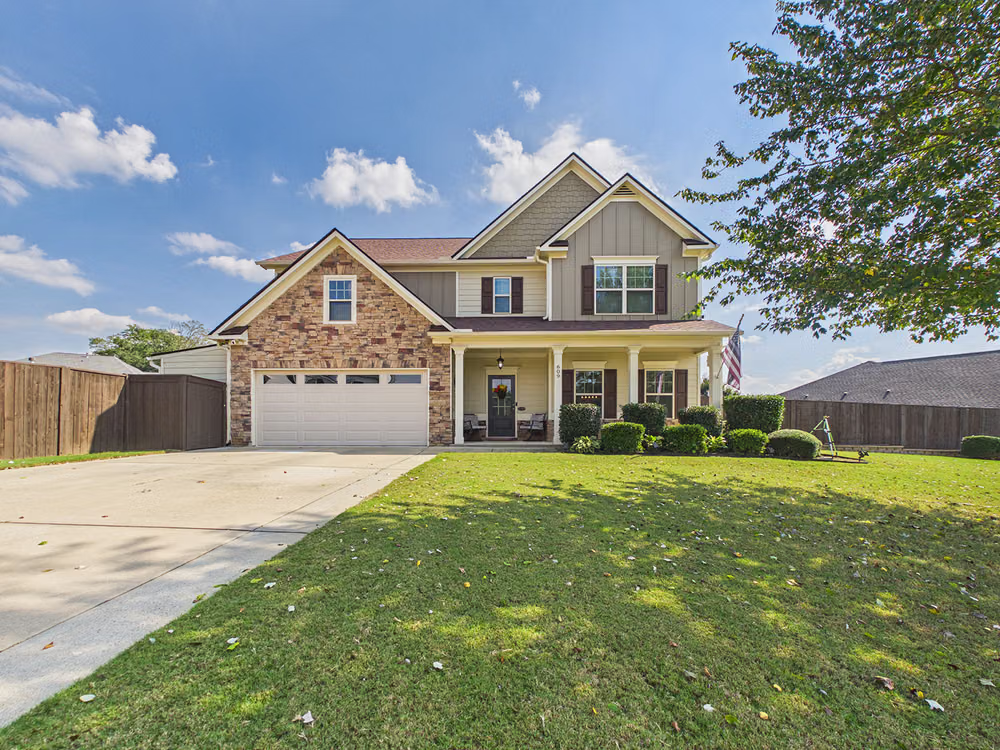 Before: the daytime exterior.
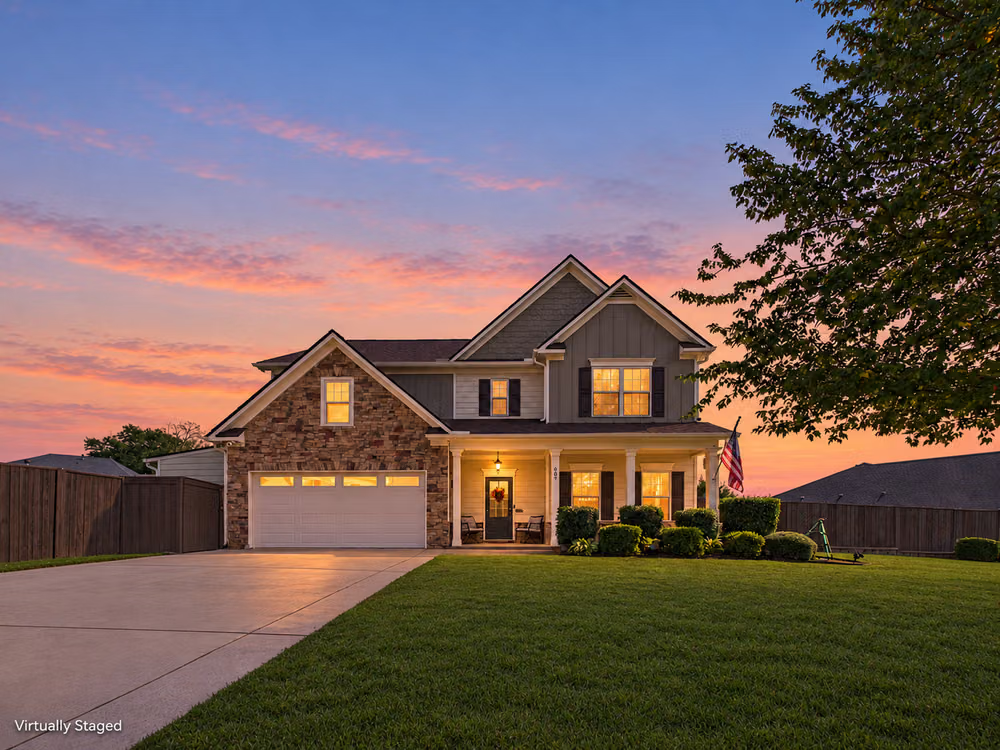 After: virtually altered. The sky and lighting were changed digitally, and the image carries a label saying so.
The house, the lawn, the driveway and the roof are the same. Only the light and sky changed.
How is it different from a real dusk shoot?
A real dusk shoot means a photographer shows up near sunset, with the home’s lights on, and photographs while the sky is still colorful. It can look wonderful. It also comes with real constraints:
- The window of good light is short, so timing has to be right.
- A cloudy or hazy evening can leave the sky flat.
- It usually means a separate trip, on top of the daytime visit.
- Someone has to turn on every light in the house.
Virtual twilight skips most of that. It starts from a daytime photo that we already have, so there is no extra trip and no dependence on that evening’s sky. The tradeoff is that it is an edit, not an untouched photo, which is why labeling matters.
For help picking the right time for the daytime shots themselves, see the best time of day for real estate photos.
Which photos should get the twilight treatment?
You get one or two with each package, so pick the ones that earn it.
- The front exterior. This is usually the cover photo and the one buyers see in search results. A dusk front pulls the eye in a scroll of daytime thumbnails.
- The pool. Lit water and soft sky make a pool look like the best part of the evening.
- A fire pit or patio. Flames and warm light suggest evenings outdoors, which is the point of an outdoor living space.
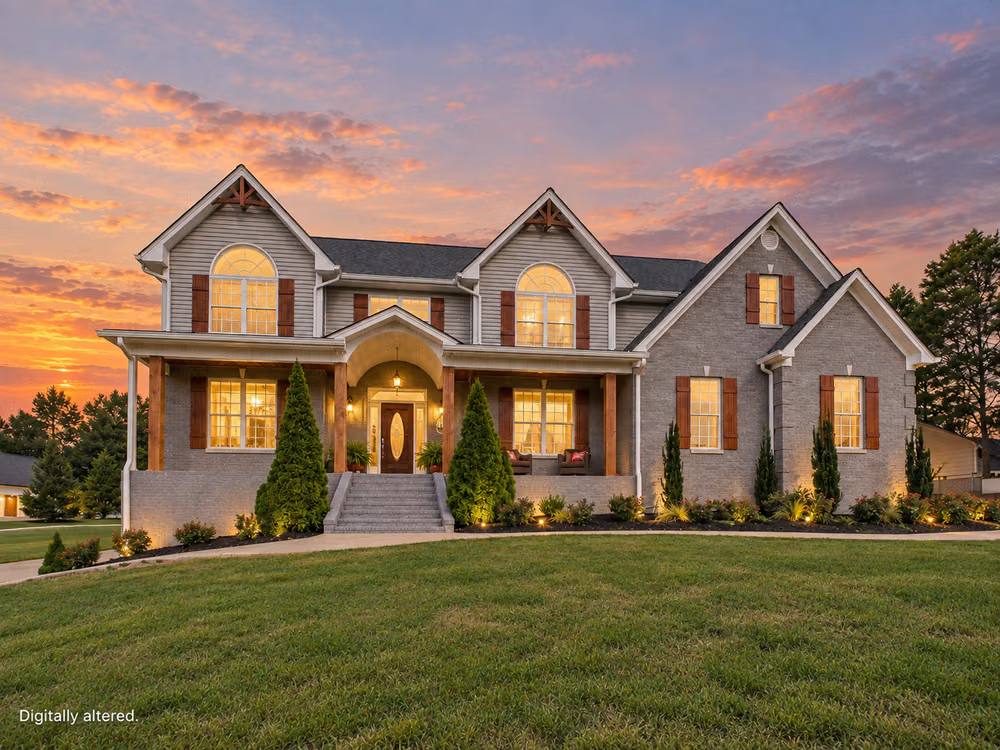 A home after a virtual twilight edit. The image is labeled as digitally altered.
Interiors do not need twilight. A kitchen photographed in good daylight is already doing its job.
When does twilight not help?
A few honest cases:
- A rough exterior. Dusk will not hide damage. Fix what you can first.
- Homes with no curb appeal to show. If the best feature is inside, put the effort there.
- A lot of competing clutter in the frame. Cars, bins and hoses still show up in the dark.
Our prep checklist covers the exterior basics, like putting cars out of sight, moving trash cans and mowing the lawn.
How do you label a virtual twilight photo?
Be clear that the image is edited. A buyer who drives up in the afternoon should not feel tricked by a pink sky.
Our images carry a small label in the corner, such as “Virtually Staged” or “Digitally Altered”, and we suggest adding a line in the listing remarks too. The exact requirements depend on your MLS, so check your MLS’s current rules.
What makes a twilight edit look natural?
The best ones are subtle. A few things separate a believable twilight photo from an obvious fake:
- The sky matches the light on the house. If shadows point one way and the sunset glows from the other, buyers feel something is off.
- Windows glow, but not too much. A warm, even light looks lived in. Blazing yellow rectangles look like a sticker.
- The exterior lights make sense. Porch lights and sconces should be on, and the rest of the scene should read as evening.
- Nothing is invented on the house itself. The roofline, siding and landscaping stay true.
That last point is the line we hold. The edit changes the time of day, not the property.
Who gets the most from twilight?
Agents with a listing in a busy price range, where many homes look alike in a scroll, tend to get the most from it. So do homes with a pool or an outdoor living area that is meant for evenings. And a listing whose front exterior is plain at midday can look noticeably better at dusk.
If a home has a very strong daytime exterior already, you can use the twilight as a second photo rather than the cover, and let the two work together.
How does twilight fit into the order of photos?
Many agents use the twilight exterior as the cover. It stands out, and it sets a tone. Others lead with a bright daytime front and place the twilight second or third, so that buyers see both the real daytime look and the evening mood. Either is fine. We talk about gallery order in listing photos on Zillow and first impressions.
You can see twilight photos next to the daytime originals, plus a pool and fire pit, in our Canton project.
What does it cost?
For the first one or two photos, nothing extra. The Photo Collection starts at $249 for a vacant home and $349 occupied, and the Showcase Collection is $599, all for homes up to 3,000 sq ft. Both include 1-2 twilight photos, along with grass enhancement and minor touch-ups. Full pricing is on our homes page.
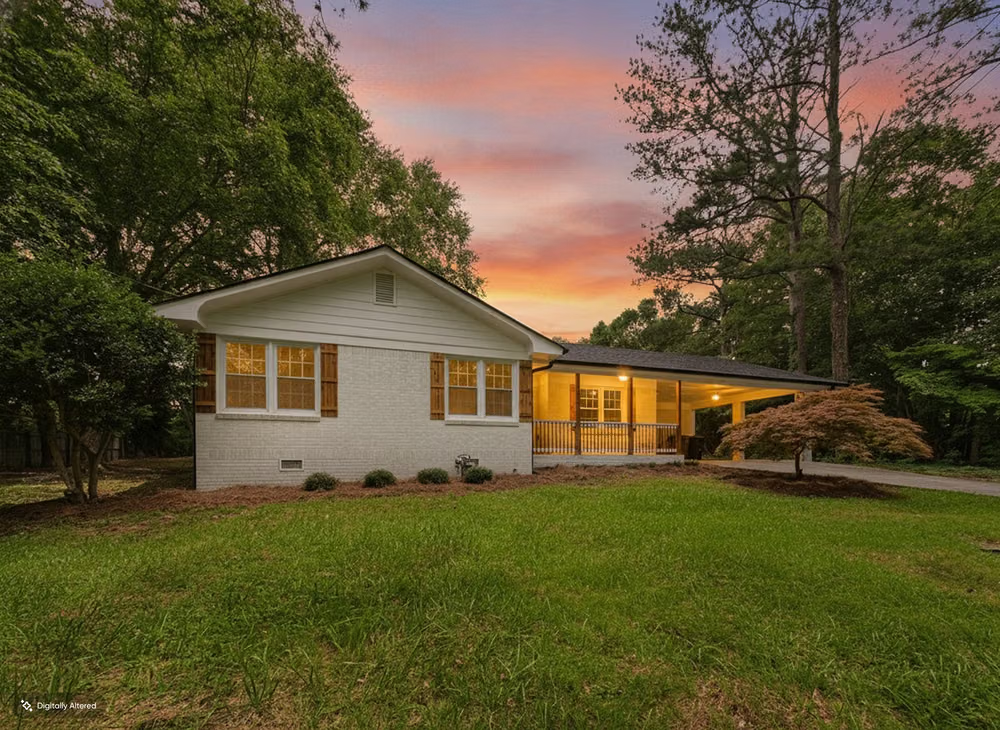 A ranch home at dusk, virtually altered. Warm windows give a plain exterior a lot of drama.
The bottom line
Virtual twilight gives you the dusk look without the dusk schedule. Use it on the front exterior and the best outdoor space, label it as edited, and tidy the property first. With us, the first one or two come with the package.