Virtual staging with us costs $15 per image, or $149 for all rooms in homes up to 3,000 sq ft. Larger homes add $0.03 per sq ft above 3,000 on the all-rooms price. Real furniture, by comparison, runs a median $1,500 with a staging service, according to the 2025 NAR survey.
Below: the numbers, when to pick one room versus all of them, which rooms matter most, and how to label the photos.
What does virtual staging cost?
Here is our staging price list next to the other digital edits we offer. All are add-ons to your photo package.
| Service | Price | Notes |
|---|---|---|
| Virtual staging, per image | $15 | Pay only for the rooms you pick |
| Virtual staging, all rooms | $149 | Plus $0.03/sq ft above 3,000 |
| Virtual decluttering | $10/image or $99 all rooms | Plus $0.02/sq ft above 3,000 |
| Virtual repainting | $15/image | Per image |
Photos come first. The Photo Collection starts at $249 for a vacant home and the Showcase Collection is $599, both for homes up to 3,000 sq ft. Staging is added on top. You can see the full list on our homes page.
When is one room enough, and when should you buy all rooms?
Do the division. Ten images at $15 is $150, which is a dollar more than the $149 all-rooms price. So the break-even is right around ten images.
- Two to five rooms: pay per image. Five images is $75.
- Most of a vacant house: buy all rooms at $149.
- A big house: add the square-foot charge. A vacant 3,600 sq ft home is 600 sq ft over the line, and 600 x $0.03 = $18. All rooms comes to $149 + $18 = $167.
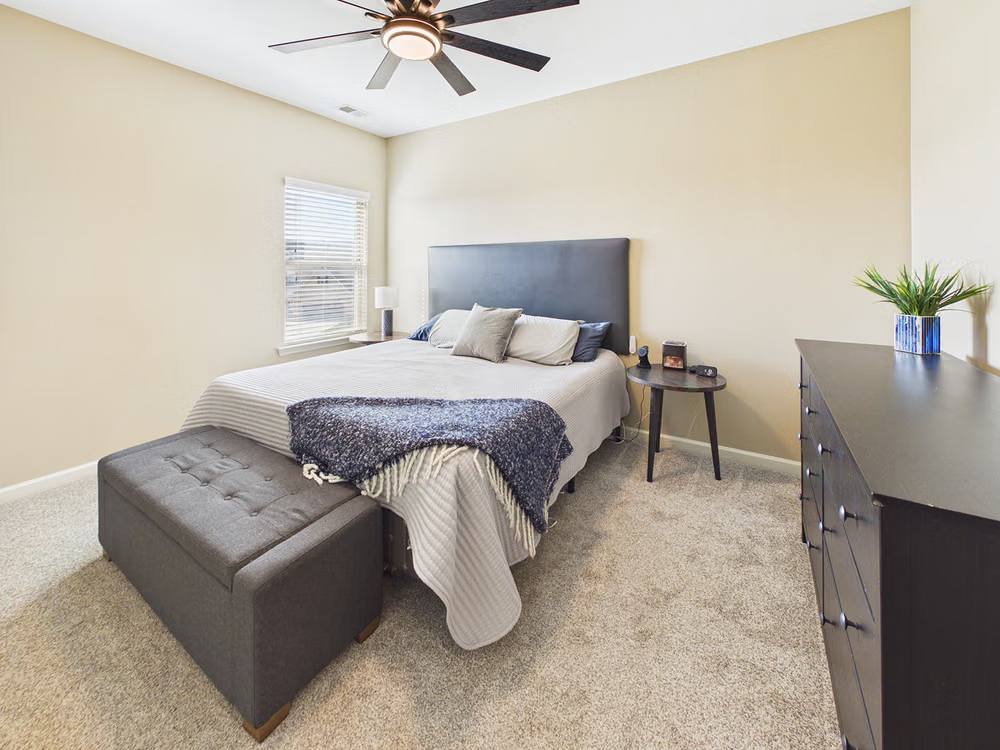 Before: the bedroom as photographed.
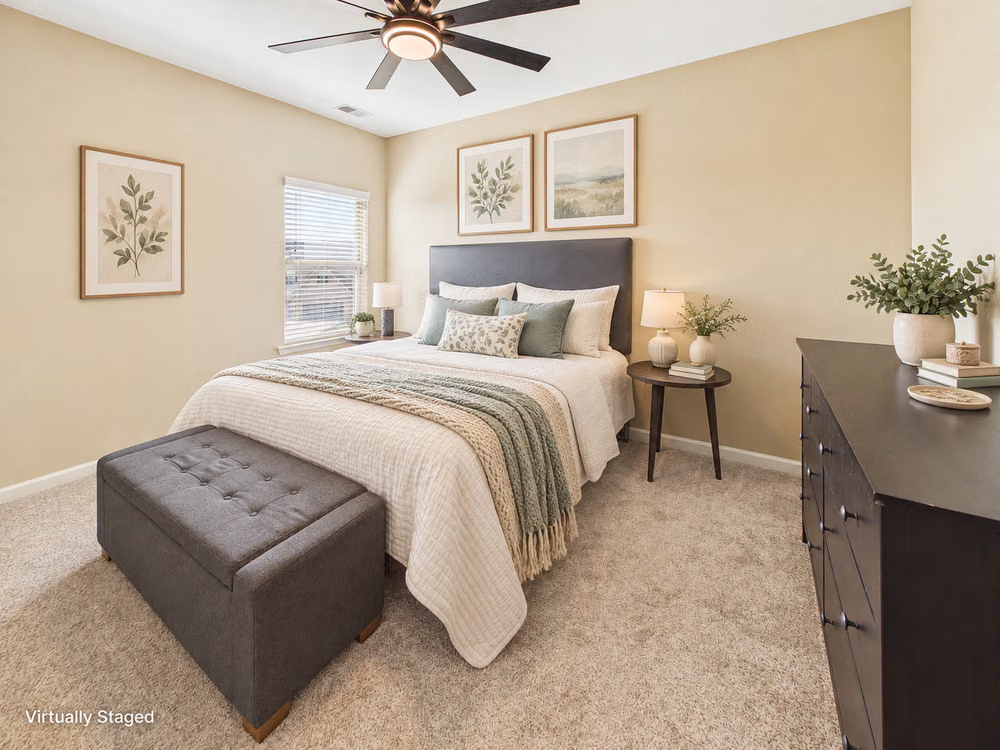 After: virtually staged. The bedding, artwork and accessories were added digitally.
How does that compare to physical staging?
NAR’s 2025 Profile of Home Staging asked 1,266 Realtors about cost. The median was $1,500 when a staging service did the work, and $500 when the agent staged the home. Our $149 all-rooms price is about a tenth of the service figure and under a third of the agent figure.
Cost is only part of it. Physical staging has to be scheduled, delivered, set up and taken down, and the furniture stays in the house for the shoot and the showings. Virtual staging is done on your photos after the shoot, and delivery doesn’t wait on a truck.
The tradeoff is just as real: a buyer who walks in will see an empty house. We cover that in virtual staging vs real staging.
Which rooms are worth staging?
Start where agents do. In the NAR survey, the living room (91%) and the primary bedroom (83%) were the most commonly staged rooms. That makes sense: they are the rooms buyers use to imagine daily life.
After those two, consider:
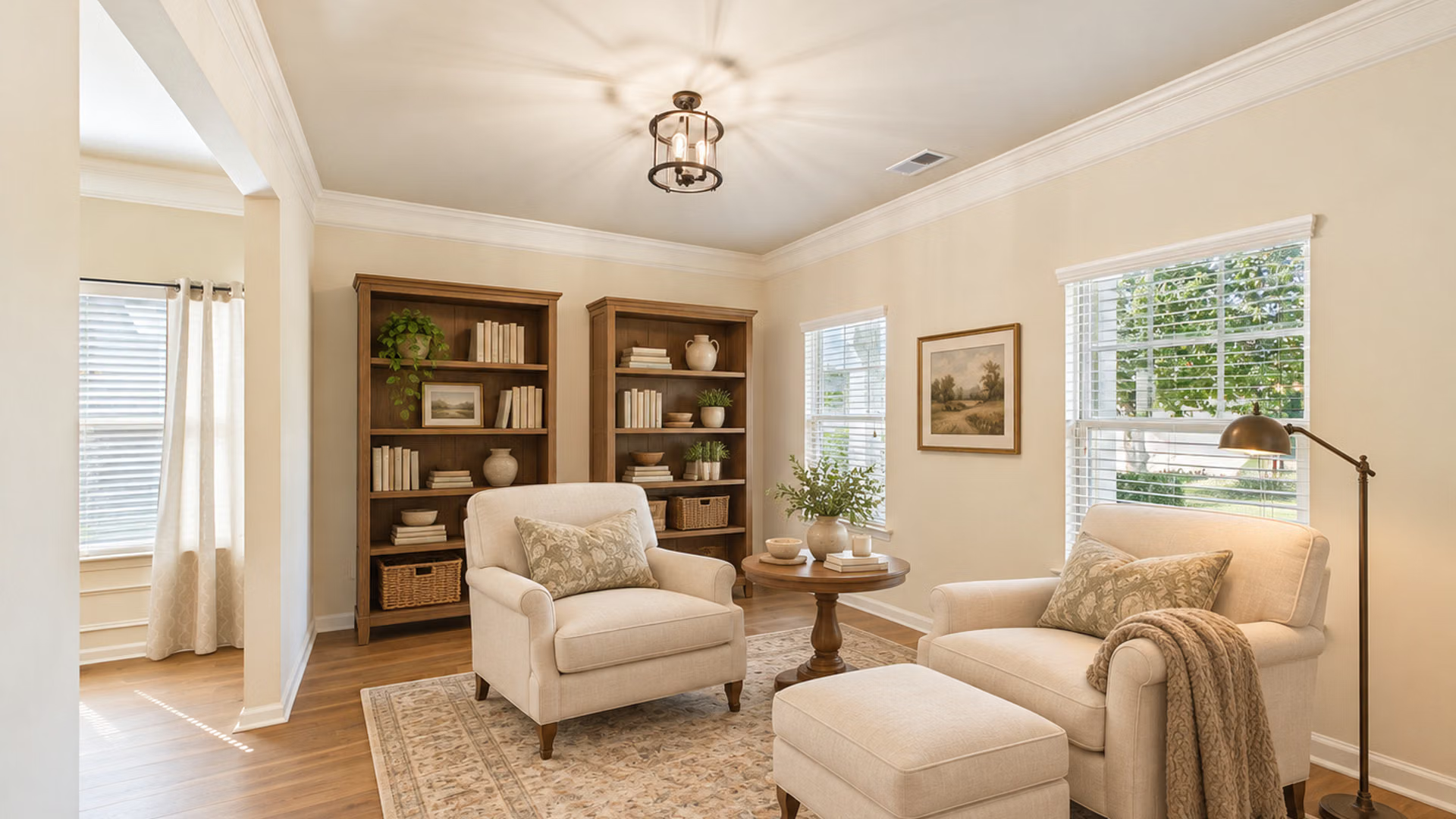
- The room that is hardest to read empty. A bonus room, loft or sitting room with no obvious purpose is the best candidate. The staged sitting room at the top of this article is a good example.
- The dining area, if the home is vacant and the space looks small without a table.
- Outdoor living spaces. A covered patio reads better with seating.
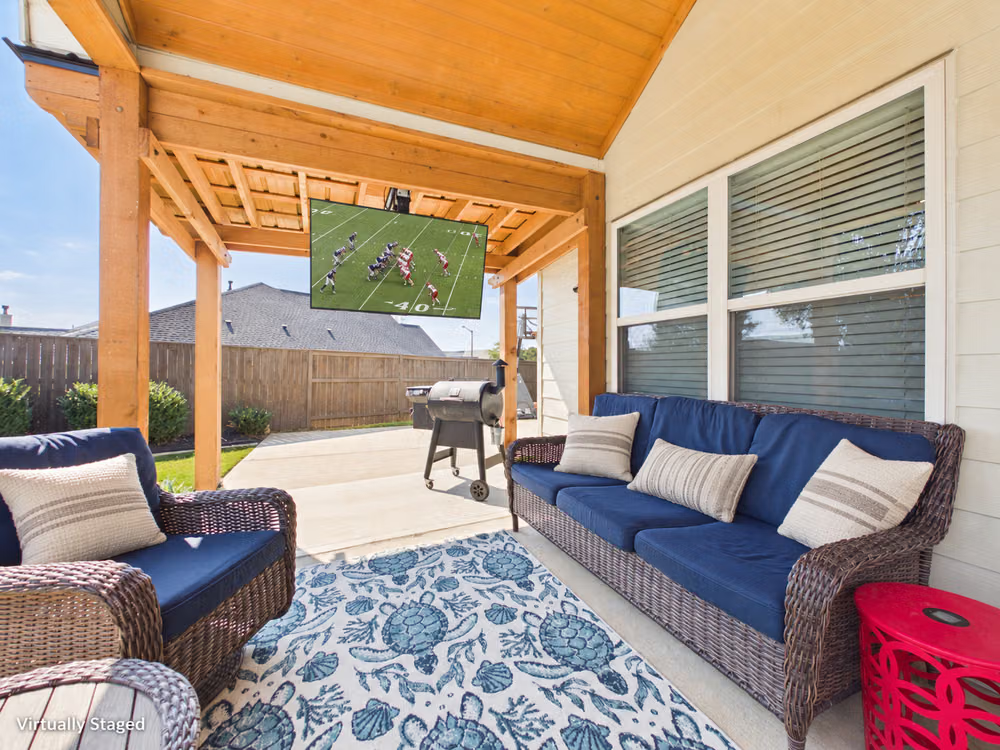 Virtually staged covered patio, labeled as such in the corner of the image.
Bathrooms, closets and garages rarely need staging, and staging them just uses up your image count.
What do agents say about results?
The NAR numbers on staging are encouraging, with a caveat. They cover staging in general, physical and virtual alike.
- 83% of buyers’ agents said staging made it easier for buyers to picture the home as theirs.
- 49% of sellers’ agents said staging reduced time on market.
- 29% of sellers’ agents reported a 1% to 10% increase in the dollar value offered, and 17% of buyers’ agents reported a 1% to 5% increase.
These are agent reports, not sale data. Use them as a reason to try it on the right rooms, not as a promise to a seller.
What makes virtual staging look believable?
Cost is not the only thing to weigh. A cheap edit that looks fake costs you trust. A few habits keep it believable:
- Match the room. Furniture should suit the size, style and price of the home. A giant sectional in a small room reads as a trick.
- Leave the real features alone. Windows, floors, fixtures and views stay as they are. Staging adds things, it does not fix them.
- Do not overdo the decor. A few good pieces beat a crowded scene.
- Start with a clean room. Staging works best on an empty room or one we have decluttered first.
If a room is cluttered rather than empty, decluttering ($10 per image or $99 for all rooms) may be the better first step, and sometimes the only one you need.
How should you label staged photos?
Be upfront. Staged images should look staged to anyone who reads the listing. We add a small “Virtually Staged” stamp in the corner of each staged image, and we suggest saying so in the remarks too.
Buyers feel misled when the furniture they loved is not in the house. A clear label avoids that, and the home still looks its best.
The exact wording and any requirements depend on your MLS, so check your MLS’s current rules. We go through the general picture in is virtual staging legal in Georgia.
See it on a real listing
Our Canton project includes staged rooms next to the originals, so you can judge the quality before you order.
The bottom line
Virtual staging is $15 per image or $149 for all rooms, so for most agents the sensible move is to stage the two or three rooms that matter, usually the living room and primary bedroom, and label them clearly. Go for all rooms only when most of a vacant home needs it. Compared with a median $1,500 for a staging service, the price is small enough to try on any empty listing.